
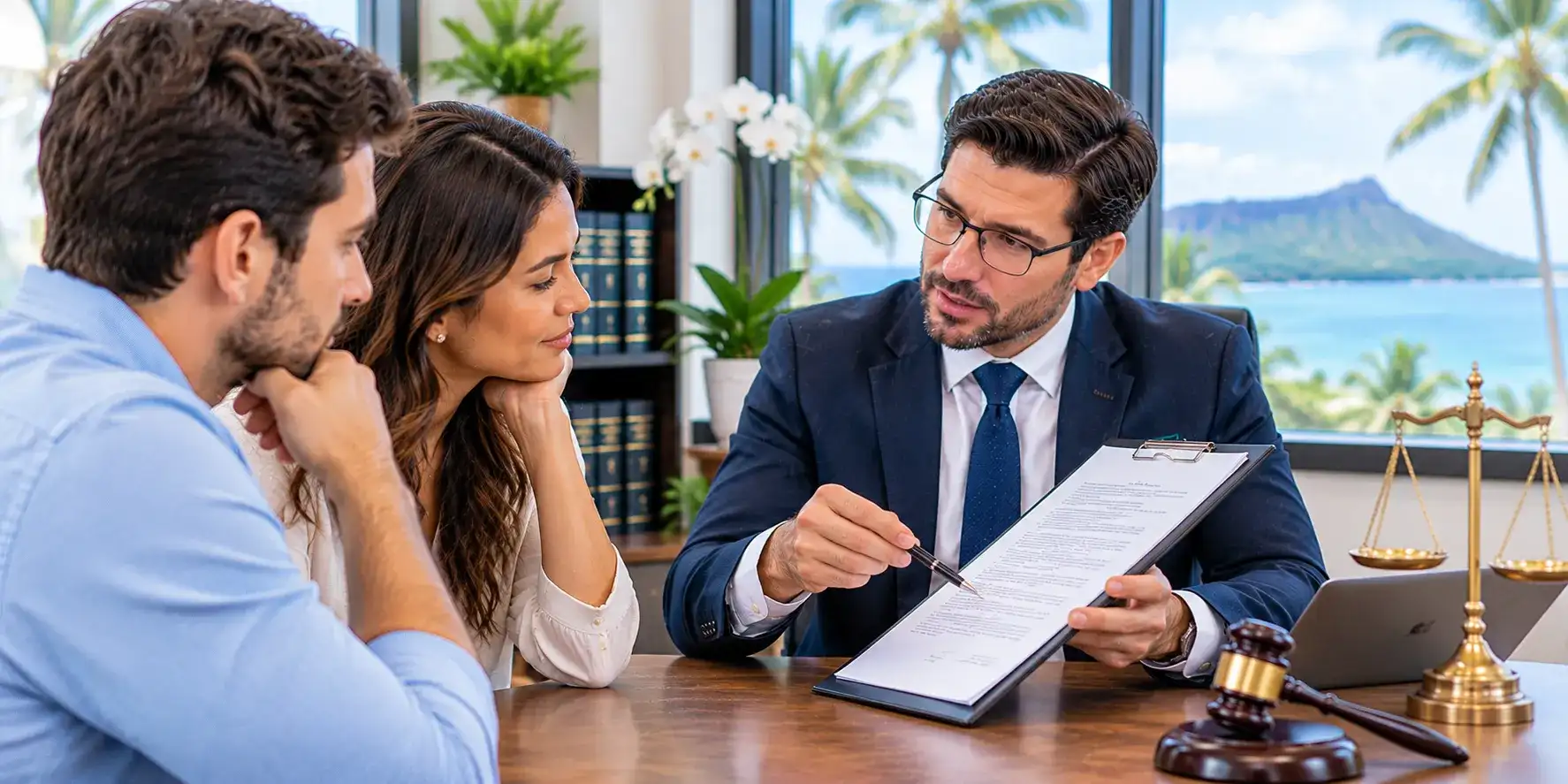
When a marriage in Hilo reaches its end, the first question is often practical: where do I start? Ohana Law Firm helps Big Island residents answer that question with clear steps, not guesswork. William Dean often meets clients from Puna who arrive with a folder of papers and one clear goal, to file correctly the first time.
Divorce in Hawaii follows Hawaii Revised Statutes Chapter 580, which sets the rules for filing, service, property, and children. This guide walks through each step in plain language, so you can see what the court expects before you file.
The information in this article is for educational purposes only and does not constitute legal advice. For advice specific to your situation, contact a licensed Hawaii attorney. The outcome of any legal matter depends on the specific facts and applicable law. Past results do not guarantee future outcomes.
To file for divorce in Hawaii, file a Complaint for Divorce with the Hawaii Family Court in the circuit where you are domiciled. Pay the filing fee, serve your spouse, and complete the required forms and parenting class if you have children. The court then reviews your case under Hawaii Revised Statutes Chapter 580.
1. Check That You Can File in Hawaii
Yes, if you are domiciled in Hawaii and file in the Family Court circuit for your home island. Domicile at filing controls, so ask an attorney to confirm the current wording of Hawaii Revised Statutes Section 580-1 for your case.
For Hawaii Island residents, that court is the Hawaii Family Court, Third Circuit, which serves Hilo, Kona, Waimea, Puna, Kohala, Ka’u, and Hamakua. Filing in the wrong circuit can delay your case, so confirm your circuit before you pay the fee.
Gather proof of where you live, such as a Hawaii license, voter registration, lease, or utility bills. Keep copies of marriage, birth, and financial records in one place, because the court will ask for them later.
Do not file in another state just because the forms look simpler. A Hawaii decree from the wrong court can create problems later, when you need to enforce custody, support, or property terms.
Tell your attorney about any prior case, order, or agreement from another state. An old order can affect custody, support, or property, and the court needs to know about it.
2. Follow These Steps to File for Divorce in Hawaii
Follow the steps below in order, and keep a copy of every paper you file or receive. A missed step can add weeks to your case.
- Confirm your circuit and grounds. File in the Third Circuit if you live on Hawaii Island. Most cases use irretrievable breakdown under Hawaii Revised Statutes Section 580-41.
- Complete the Complaint for Divorce and related forms. List your property, debts, income, and requests for custody, support, or spousal support. Use the current Family Court forms from the Hawaii Judiciary.
- File the papers and pay the fee. The filing fee is $215 without minor children and $265 with minor children. Ask the clerk about a fee waiver if you cannot afford the fee.
- Serve your spouse. Your spouse must receive the filed papers by a method the court accepts, such as personal service. Keep proof of service for the court file.
- Wait for the response. Your spouse has 20 days to respond under Hawaii Family Court Rule 12. If no response is filed, you may ask the court to proceed.
- Complete the Kids First class if you have children. Parents with minor children must take this parenting class. File the certificate when you finish it.
- Finish the remaining forms and ask for a decree. File your final papers, including any agreement or proposed orders, and let the court review them before it signs the divorce decree.
3. What Does It Cost to File for Divorce in Hawaii?
The court filing fee is $215 without minor children and $265 with minor children, under the Hawaii Family Court fee schedule. That fee covers filing only, not service, copies, or attorney fees.
Total cost varies with the facts of each case. An uncontested case with an agreement often costs far less than a contested case with disputed property or custody. Ask for a clear fee estimate before you hire an attorney.
At Ohana Law Firm, your first consultation is free. Call 808-289-5199 to talk through your facts and learn what your case may cost, with no promise about the result.
| Item | Amount or time |
| Filing fee, no minor children | $215 |
| Filing fee, with minor children | $265 |
| Spouse response time | 20 days |
| Uncontested case, typical practice | 2 to 3 months |
| Contested case | Longer, based on disputed issues |
4. What Happens After You File?
An automatic restraining order takes effect when you file, under Hawaii Revised Statutes Section 580-10.5. It limits changes to property, insurance, and other matters while the case is pending, so read it with care.
Both spouses must share financial information with each other. Full and honest disclosure helps the court divide property fairly and can prevent later disputes about hidden assets or debts.
Temporary orders may set custody, support, or use of the home while the case moves forward. If you and your spouse agree on some issues, put those agreements in writing for the court to review.
Keep a simple record of every payment, visit, and court date after you file. Notes made at the time are easier to trust than memory months later, when the court asks what happened.
Do not move money, sell property, or change insurance while the case is pending without advice. The automatic restraining order limits such moves, and a misstep can harm your case.
5. How Long Does a Hawaii Divorce Take?
There is no 60-day waiting period in the statute. Uncontested cases typically take 2 to 3 months in practice for paperwork, service, the Kids First parenting class where children are involved, and court review.
Contested cases take longer, often many months, when property, custody, or support remain in dispute. Court schedules, discovery, mediation, and hearings all add time to the process.
Missing forms, slow service, or an unsigned agreement are common causes of delay. A careful filing, with all forms complete, gives the court what it needs to move your case forward.
Ask the clerk for a case number and keep it on every later filing. A clear file helps the court match each paper to your case without delay.
6. Property, Children, and Your Final Decree
Property is divided under Hawaii Revised Statutes Section 580-47, which calls for a just and equitable division of the marital estate. The court looks at what each spouse owns, owes, and contributed during the marriage.
For help with that part of the case, read our guide to property division in Hawaii and talk with a divorce lawyer in Hilo about your facts. Retirement accounts, homes, and debts often need close review.
When children are involved, the court focuses on their best interests, including stable routines, school, and time with each parent. Learn more from our Hawaii family law team before you agree to a parenting plan.
The decree ends the marriage and sets the final terms for property, custody, and support. Keep a certified copy in a safe place, because banks, schools, and agencies may ask to see it.
Conclusion
How to file for divorce Hawaii comes down to filing in the right court, using the right forms, serving your spouse, and finishing each step in order. Care at the start saves time, cost, and stress later.
If you live in Hilo, Puna, Kona, or elsewhere in Hawaii County, Ohana Law Firm can review your facts and help you file with care.
The information in this article is for educational purposes only and does not constitute legal advice. For advice specific to your situation, contact a licensed Hawaii attorney. The outcome of any legal matter depends on the specific facts and applicable law. Past results do not guarantee future outcomes.
Talk With Ohana Law Firm
Ohana Law Firm serves Big Island residents 24/7. Call 808-289-5199, and your call goes straight to an attorney. Your consultation is free. Our office is at 106 Kamehameha Ave, Suite B, Hilo, HI 96720. Mahalo.
Frequently Asked Questions
What Hawaii law governs how to file for divorce in Hawaii?
Hawaii Revised Statutes Chapter 580 governs divorce in Hawaii, including filing, jurisdiction, grounds, and property division. Section 580-1 addresses domicile and the circuit where you file, while Section 580-41 covers grounds such as irretrievable breakdown. Confirm the current wording with a licensed Hawaii attorney before you file.
How much does it cost to file for divorce in Hawaii?
The Family Court filing fee is $215 without minor children and $265 with minor children. Service, copies, and attorney fees are extra, and total cost varies with the facts of each case. An uncontested case often costs less than a contested case. Contact Ohana Law Firm for a free consultation and a clear fee estimate.
How long does it take to file for divorce in Hawaii?
There is no 60-day waiting period in the statute. Uncontested cases typically take 2 to 3 months in practice for paperwork, service, the Kids First class where children are involved, and court review. Contested cases take longer when property, custody, or support remain disputed and hearings are needed.
Does Ohana Law Firm handle divorce cases across the Big Island?
Yes. Ohana Law Firm serves clients across Hawaii Island, including Hilo, Puna, Kona, Kohala, Ka’u, Waimea, and Hamakua, in the Hawaii Family Court, Third Circuit. The firm serves Big Island residents 24/7, and your call goes straight to an attorney. Call 808-289-5199 for a free consultation.
When should I contact a Hawaii attorney about filing for divorce?
Contact an attorney before you file if you have children, shared property, debts, a business, or a spouse who may contest the case. Early advice can prevent filing errors and protect your rights. Call Ohana Law Firm at 808-289-5199 for a consultation and advice specific to your situation.
