
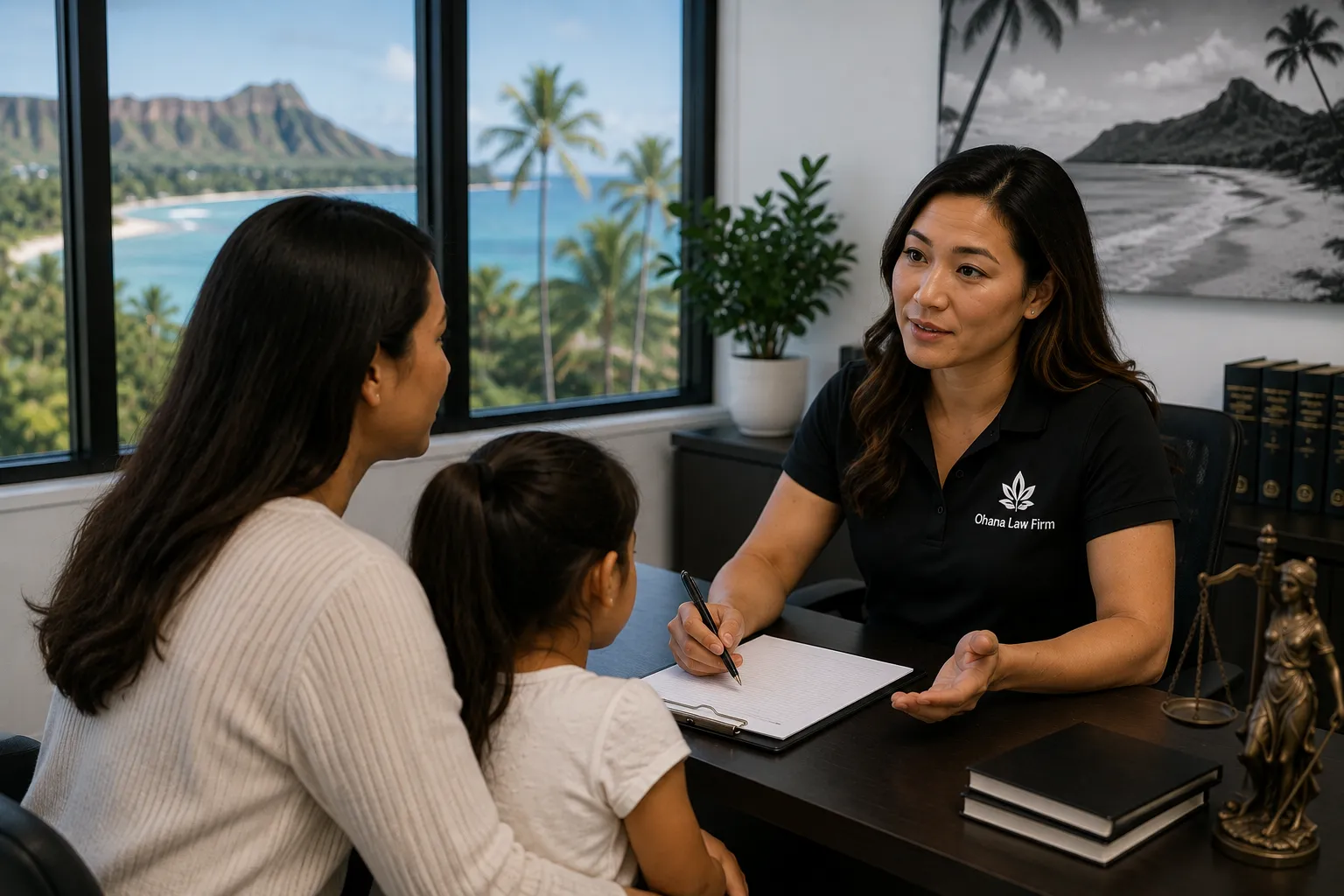
A mother in Hilo had been the primary caregiver for her two young children throughout the marriage, working part time so she could handle school pickups, doctor visits, and bedtime routines. When her husband filed for divorce, she worried his higher income would automatically tip custody in his favor.
Attorney William Dean explained that Hawaii Revised Statutes Section 571-46 does not give either parent a legal advantage based on gender or income alone. The court ultimately awarded her primary physical custody based on her established caregiving history and the stability of her home. Learn more on our child custody lawyer hawaii service.
This article is for educational purposes only and does not constitute legal advice. For advice specific to your situation, contact a licensed Hawaii attorney before taking any legal action.
| Hawaii custody law is gender-neutral. Under Hawaii Revised Statutes Section 571-46, courts decide custody based solely on the best interests of the child, with no legal preference for mothers or fathers. A mother’s established caregiving history, the parent-child relationship, and the child’s safety are factors the Third Circuit Family Court weighs, not the parent’s gender. |
What Are a Mother’s Custody Rights in Hawaii?
A mother in Hawaii has the same legal custody rights as a father. Hawaii Revised Statutes Chapter 571, specifically Section 571-46, establishes a gender-neutral best interests of the child standard that applies equally to both parents, regardless of income, occupation, or which parent filed for divorce first.
Hawaii does not follow the old tender years doctrine, which once presumed young children belonged with their mother. That presumption was eliminated decades ago, and today the Third Circuit Family Court in Hilo looks at the specific facts of each family rather than assuming either parent deserves custody based on gender.
This does not mean a mother’s rights are weaker than a father’s. It means Hawaii law asks a different question: which parenting arrangement actually serves this particular child, considering caregiving history, stability, and safety, rather than which parent happens to be the mother.
Many Big Island mothers come to their first consultation assuming the law automatically favors them, or worrying it does not favor them at all. Understanding the real standard helps set realistic expectations from the start.
How Hawaii’s Best Interests Standard Works Under HRS 571-46
Section 571-46 lists numerous factors the family court considers, including any history of abuse or neglect, the overall quality of the parent-child relationship, the history of caregiving by each parent, and each parent’s cooperation in developing a workable parenting plan.
Hawaii law presumes that frequent, ongoing, and meaningful contact with both parents generally serves a child’s best interests, which is why the court favors arrangements that keep both parents actively involved unless safety concerns say otherwise.
The statute also allows the court to consider a child’s own preference once the child is old enough and mature enough to express a reasoned opinion, though this is only one factor among many and does not control the outcome by itself.
Because the statute does not rank these factors, two Hawaii custody cases with similar facts can end differently depending on how a judge weighs caregiving history against other considerations like each parent’s home environment and cooperation with the other parent.
It helps to understand two different terms Hawaii courts use. Legal custody is the right to make major decisions about the child’s education, healthcare, and upbringing. Physical custody determines where the child primarily lives day to day. A parent can have joint legal custody while one parent has primary physical custody, which is a common outcome in Big Island cases.
HRS 571-46 Selected Best Interests Factors
| Factor | What It Means |
| History of abuse or neglect | Any documented history of physical, sexual abuse, or neglect by a parent |
| Parent-child relationship quality | The overall closeness and quality of the bond between parent and child |
| Caregiving history | Which parent has handled day-to-day caregiving before and after separation |
| Cooperation on parenting plan | Each parent’s willingness to develop and follow a workable parenting plan |
| Family violence presumption | A rebuttable presumption against custody to a parent found to have committed family violence |
| Key Insight: Hawaii’s 16 statutory factors are not ranked. A judge weighs the full picture of each family rather than applying a fixed formula. | |
Why Caregiving History Often Matters for Big Island Mothers
One of the factors under HRS 571-46 is the history of caregiving and parenting by each parent before and after separation. In many Big Island families, a mother has taken on the bulk of day-to-day caregiving, from school routines to medical appointments to coordinating childcare around work schedules.
This caregiving history can carry real weight in a custody decision, not because Hawaii law favors mothers, but because judges give weight to the parent who has an established, demonstrated relationship with the child’s daily needs and routines over time.
Fathers who have been primary caregivers benefit from this same factor under the same statute. The point is not gender. The point is which parent’s history shows the ability to meet the child’s ongoing needs, a distinction that matters for Big Island parents on both sides of a custody dispute.
Documenting this history matters. School records, pediatrician visit logs, and even text messages coordinating pickups can help demonstrate a consistent caregiving role if the case becomes contested.
Big Island work schedules, whether in tourism, agriculture, or healthcare, can create irregular hours that make caregiving patterns look different from a typical nine to five household. A knowledgeable attorney can help the court understand these local work realities rather than letting a schedule alone create a misleading impression.
Custody and Domestic Violence: Protections for Mothers in Hawaii
Hawaii law includes a specific protection for custody cases involving family violence. Under HRS 571-46, a finding that a parent committed family violence creates a rebuttable presumption against awarding that parent sole custody, joint legal custody, or joint physical custody.
When the court finds family violence, it must treat the safety and well-being of the child and the parent who was the victim as the primary factor in the custody decision, ahead of other considerations such as which parent has more income or a larger home.
Mothers on the Big Island who have experienced domestic violence should know that Hawaii Family Court takes documented family violence seriously in custody proceedings, and that a protective order history is one of the factors the court is required to weigh under the statute.
A single incident, without more, does not automatically decide a case, but a pattern of documented family violence can significantly shape the final custody and visitation arrangement the court orders.
| If you are experiencing family violence, your safety and your child’s safety come first. Contact law enforcement or the Family Court about a protective order rather than waiting to raise it later in a custody case. |
Steps a Mother Should Take to Protect Her Custody Rights in Hawaii
Keep records of your involvement in your child’s daily life, including school communications, medical appointments, and activities. This documentation becomes evidence of the caregiving history factor under HRS 571-46 if custody becomes contested.
Avoid making major decisions about relocating, changing schools, or limiting the other parent’s contact without first talking to an attorney. Actions taken before a case is filed can affect how a judge later views your cooperation and judgment during the proceedings.
If safety is a concern, contact law enforcement or Family Court about a protective order rather than handling the situation alone. Hawaii Family Court has procedures specifically designed to address family violence in a custody case, including emergency relief when needed.
Finally, consider whether mediation could help you and the other parent reach a workable parenting plan without a contested hearing, which often reduces stress and expense for the entire family, including the children caught in the middle.
If circumstances change significantly after a custody order is entered, such as a move, a change in a parent’s stability, or a new safety concern, Hawaii allows a parent to request a modification. The same best interests standard under HRS 571-46 applies to any modification request.
When You Need a Hawaii Attorney for a Custody Case
Custody disputes become more complicated when there are disagreements about relocation, safety concerns, or a significant gap between each parent’s actual involvement with the child. Attorney William Dean has helped Big Island mothers present their caregiving history clearly and effectively under HRS 571-46.
A custody evaluator or guardian ad litem may become involved in more contested cases, and having an attorney who understands how these court-appointed professionals operate can help ensure your side of the story is presented accurately and completely.
The outcome of any custody matter depends on the specific facts of the case and applicable law. Past results do not guarantee future outcomes, but experienced representation helps ensure the court sees the full picture of your relationship with your child.
Ohana Law Firm Serves Mothers Across the Big Island
Ohana means family, and Ohana Law Firm treats every Big Island client like family. Whether you live in Hilo, Kailua-Kona, or Puna, William Dean is available 24/7 to talk through your custody concerns and help you understand your rights under Hawaii law.
If you have questions about your custody rights on the Big Island, contact Ohana Law Firm for a free consultation. Mahalo for reading, and we look forward to helping your family move forward with confidence.
Conclusion
Hawaii’s gender-neutral custody standard under HRS 571-46 means a mother’s rights come from the same best interests analysis that applies to every parent. Caregiving history, stability, and safety, not gender, are what the Third Circuit Family Court in Hilo actually weighs.
If you have questions about your custody rights on the Big Island, contact Ohana Law Firm for a free consultation. This article is for educational purposes only and does not constitute legal advice; for advice specific to your situation, contact a licensed Hawaii attorney before taking any legal action.
| Ohana Law Firm serves Big Island residents 24/7. Call 808-430-0704 — your call goes straight to an attorney. Free consultation. Mahalo nui loa. |
Frequently Asked Questions
What Hawaii law governs a mother’s custody rights?
Mother’s custody rights in Hawaii are governed by Hawaii Revised Statutes Chapter 571, specifically Section 571-46. This statute establishes a gender-neutral best interests of the child standard, meaning a mother has the same legal custody rights as a father, without any automatic preference based on gender.
How much does a custody case cost in Hawaii?
Legal fees for a custody case depend on whether the case is contested and whether a custody evaluator becomes involved. Straightforward, agreed cases generally cost less than disputes involving safety concerns or relocation. Ohana Law Firm offers a free consultation so you understand your likely costs upfront.
How long does a custody case take in Hawaii?
Custody case timelines vary depending on whether parents agree on a parenting plan. Uncontested cases can resolve within a few months. Contested cases involving custody evaluations, safety concerns, or disputed caregiving history can take considerably longer through the Third Circuit Family Court in Hilo.
Does Ohana Law Firm handle custody cases for mothers on the Big Island?
Yes, Ohana Law Firm represents mothers in custody cases throughout the Big Island, including Hilo, Kailua-Kona, and Puna. William Dean helps mothers document caregiving history and present their case clearly under HRS 571-46, whether the matter is contested or resolved by agreement.
When should I contact a Hawaii attorney about custody?
You should contact a Hawaii attorney as soon as custody becomes a concern, especially if safety, relocation, or a significant change in caregiving arrangements is involved. The outcome of any custody matter depends on the specific facts of your case, so early legal advice helps protect your rights and your child’s wellbeing.
